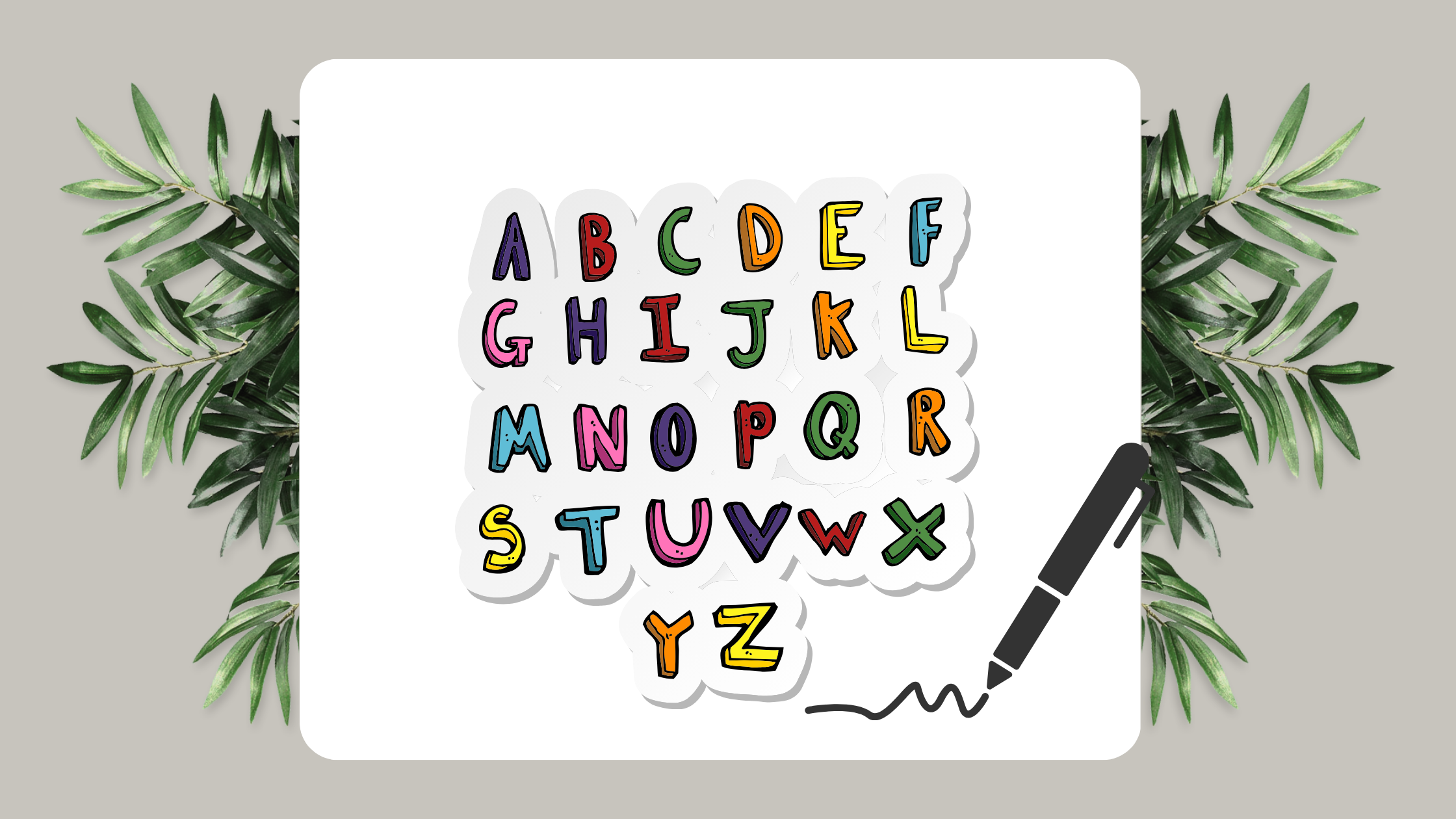

The English alphabet is the foundation of the language. It consists of 26 letters. Each letter has its own shape and sound. Learning the alphabet is the first step in reading and writing.
History of the English Alphabet
The English alphabet has a long history. It comes from the Latin alphabet. The Romans brought it to Britain. Over time, the alphabet changed. Some letters were added. Others were removed.
The modern English alphabet has:
- 5 vowels (A, E, I, O, U)
- 21 consonants (all other letters)
The letter „Y” can sometimes act as a vowel.
Uppercase and Lowercase Letters
Each letter has two forms:
- Uppercase (capital letters) – Used at the beginning of sentences and for proper nouns.
- Lowercase (small letters) – Used for regular words.
Example:
- A (uppercase) / a (lowercase)
- B (uppercase) / b (lowercase)
Letter Sounds
Letters can make different sounds. Some letters always sound the same. Others change based on the word.
The Letter C
- Hard C (K sound) – Used before A, O, U.
Cat (sounds like K)
Cot (sounds like K)
Cut (sounds like K)
- Soft C (S sound) – Used before E, I, Y.
City (sounds like S)
Cent (sounds like S)
Cycle (sounds like S)
The Letter G
- Hard G (G sound) – Used before A, O, U.
Go (sounds like G)
Gum (sounds like G)
Game (sounds like G)
- Soft G (J sound) – Used before E, I, Y.
Giraffe (sounds like J)
Gym (sounds like J)
Gem (sounds like J)
The Letter S
- Usually sounds like S (sun).
- Sometimes sounds like Z (rose).
The Letter X
- Sounds like KS (box).
- Sometimes sounds like Z (xylophone).
Vowel Sounds
Vowels (A, E, I, O, U) can make many sounds. The letter Y sometimes acts as a vowel too.
Short Vowel Sounds
- A – Apple (æ)
- E – Egg (ɛ)
- I – Ink (ɪ)
- O – On (ɒ)
- U – Up (ʌ)
Long Vowel Sounds
- A – Cake (eɪ)
- E – Bee (iː)
- I – Bike (aɪ)
- O – Bone (oʊ)
- U – Cute (juː)
Other Vowel Sounds
- „OO” – Book (ʊ) vs. Moon (uː)
- „OU” – Loud (aʊ) vs. Soup (uː)
- „EA” – Head (ɛ) vs. Tea (iː)
Silent Letters
Some letters are written but not spoken. Examples:
- K in knee (silent).
- W in write (silent).
- B in comb (silent).
Alphabet Order
The alphabet has a fixed order. This order is used in dictionaries and lists. Knowing the order helps with finding words quickly.
The order is:
A, B, C, D, E, F, G, H, I, J, K, L, M, N, O, P, Q, R, S, T, U, V, W, X, Y, Z.
Writing the Alphabet
Letters can be written in different styles. The most common are:
- Print letters – Simple, clear letters used in books.
- Cursive letters – Connected letters used in handwriting.
Many schools teach both styles.
Fun Facts About the English Alphabet
- The word „alphabet” comes from the first two Greek letters: Alpha and Beta.
- The letter „E” is the most used letter in English.
- The letter „Z” is called „Zed” in British English and „Zee” in American English.
- The shortest complete sentence in English is „I am.„ It uses two letters from the alphabet.
Why Is the Alphabet Important?
The alphabet is essential because:
- It helps in reading and writing.
- It is used in organizing information.
- It is the basis of spelling and pronunciation.
Without the alphabet, communication would be much harder.
Tips for Learning the Alphabet
If you are learning the English alphabet, try these tips:
- Sing the alphabet song – It helps remember the order.
- Practice writing letters – Use worksheets or tracing apps.
- Read simple books – They often focus on letter recognition.
- Play word games – Scrabble or word searches can help.
The English alphabet is simple but powerful. It is the key to reading, writing, and speaking. Whether you are a beginner or just refreshing your knowledge, understanding the alphabet is crucial. Keep practicing, and it will get easier!